Recognizing Peptide Purity: What 99%+ Truly Implies
Understanding Peptide Purity Screening
Peak Laboratory is a specialized distributor of high-purity chemical reagents and peptides. All items provided are purely for in-vitro research laboratory research and development make use of only. Check out front runner research peptides with batch-specific COA documentation and HPLC/MS verification. Products are for in-vitro lab research study use only and are except human consumption.- Peptide pureness refers to the quantity of the right peptide in the peptide item.
- We use innovative reverse-phase HPLC to establish the pureness of customer peptide samples.
- Identification testing validates that what was synthesized is in fact the designated series.
- We help differentiate chromatographic pureness from actual peptide quantity so customers can prepare options and compare lots with greater confidence.
Mass Confirmation
The friend web page on why 99 percent pureness matters discusses why tiny impurity portions can still matter in sensitive in-vitro assays. Together with this peptide screening guide, those web pages form the trust-methodology layer behind the item brochure. Peptide screening is powerful, however scientists should read the scope of each approach very carefully.
One of the most rigorous grade, entailing careful HPLC filtration-- occasionally multiple rounds-- and rigorous QC. Needed for measurable research studies, architectural biology, in vivo research study models, and any application where even small amounts of impurity might impact outcomes. This is the quality where the boost most dramatically, since accomplishing that last 1-- 3% of purity requires discarding a significant fraction of the manufactured product. A deletion peptide missing a single deposit may still bind to the very same receptor, yet with different affinity or selectivity. In concentration-response experiments, these pollutants can shift contours, flatten plateaus, or present biphasic habits that obscures real activity of the target substance. The isoelectric point (pI) is an important criterion for comprehending peptide solubility and actions in various atmospheres.What To Look For In A Certificate Of Analysis
Exactly How Do You Validate Peptide Pureness And Identity?
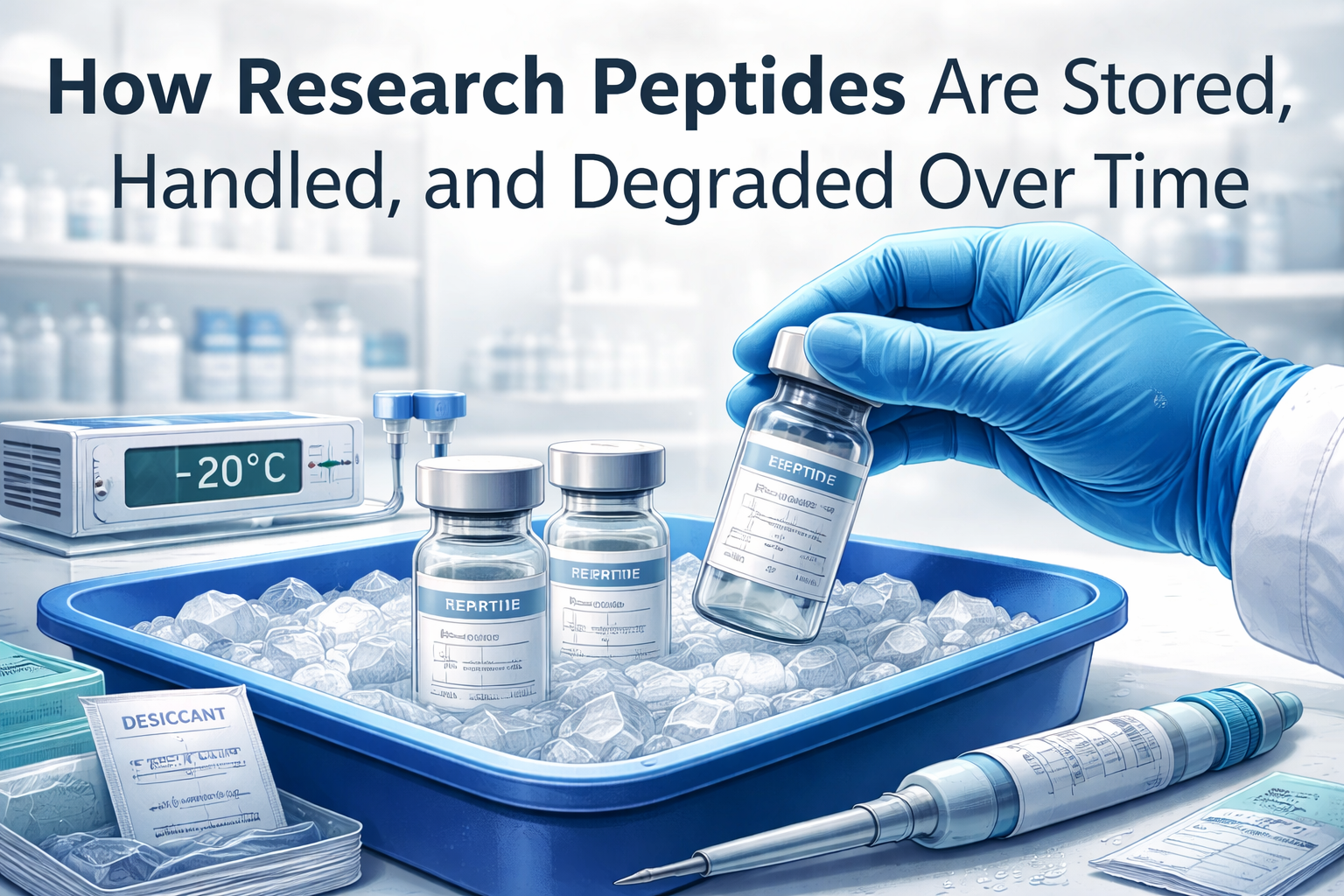
Significantly, this pureness number is typically established after purification (e.g. https://mylesnvsk607.ironwoodscope.com/posts/what-is-peptide-purity-and-why-does-it-matter-in-research-grade-peptides-qing-li-peptide by HPLC) and concentrates on peptide contaminations-- it does not count recurring water, salts, or counter-ions in the dried out peptide powder. To put it simply, the purity percentage has to do with the structure of peptide varieties in the sample, not the weight payment of water or salts. A peptide might be 98% pure (indicating extremely couple of peptide impurities) yet still consist of some water or trifluoroacetate salt; those non-peptide parts would be shown in the web peptide web content as opposed to the pureness portion. At Creative Peptides, we supply custom-made peptide chemical and physical analyses for study groups that need dependable data on peptide identity, purity, make-up, remedy habits, and sample quality. Our solution sustains synthetic, customized, cyclic, conjugated, and difficult peptide examples with logical process developed around the real task concern rather than a dealt with default panel.Peptide testing is the set of logical checks utilized to assess a peptide sample prior to it is utilized in a research study process. In functional COA evaluation, the term usually refers to pureness screening, identity screening, and paperwork review. Purity testing asks how much of the spotted example is the primary peptide versus associated pollutants. Identity testing asks whether the determined mass or sequence-related proof matches the desired peptide. Documentation review asks whether the record is batch-specific, deducible, and detailed sufficient to be examined. Peptide screening is the logical process utilized to confirm that a research study peptide is both pure and appropriately determined.
BOC Sciences, with its robust logical platform and professional group, Clinical Research concentrates on top quality screening services for peptide basic materials, peptide microspheres, peptide nanoparticles, and peptide solution preparations. We collaborate with biotech, pharmaceutical, CRO, CDMO, and scholastic teams on peptide chemical and physical evaluations that sustain research study and non-clinical choice production. Contact us today to review your peptide sequence, sample condition, and analytical goals. Along with HPLC and MS, specialized laboratories may utilize orthogonal techniques for added precision. For instance, capillary electrophoresis can be utilized to separate really hydrophilic peptides or to verify results, and MALDI-TOF mass spectrometry can aid in mapping larger or modified peptides. Many peptide manufacturers or providers will certainly give a COA (Certification of Analysis), for instance our bpc 157 tb 500 blend, that consists of the pureness portion by HPLC and identity confirmation by MS for each set. Top-tier laboratories commonly report peptide purity well over 95%, frequently ≥ 98-99%, by using advanced HPLC and MS evaluations. They additionally test both resources and ended up peptide vials, which helps capture any kind of impurities, destruction products, or solution variances.